

Harlem Candle Company: A perfect example of brand storytelling.
It's 1933, inside a dimly lit jazz bar in Harlem. A beautiful young woman stands on stage, her voice soulful and haunting, singing about lost love to a captivated room. The air is thick with the scent of leather, tobacco and vanilla. In the corner, a couple leans toward each other over a small wooden table, lost in conversation and moved by the music. A single candle in an old wine bottle flickers between them, lighting their faces in amber light. That is the scene I imagine every time I light a Harlem Candle Company candle. To me, this is a great example of brand storytelling.

Brand storytelling is one of those phrases makers hear constantly, usually from marketing experts on Instagram insisting we need it immediately. But at its core, it is something much simpler and far more creative. It is the feeling people step into when they encounter your work. The colors you use. The names you choose. The photographs, the mood, the details you emphasize and the ones you leave out. It is the difference between simply selling a candle and transporting someone to a specific place, memory, or atmosphere.
The best maker brands understand that people are not only buying objects. A hand-poured candle and a mass-produced one can share the same burn time, the same wax, even the same scent. What makes someone choose one over the other and come back again is rarely the product itself. It is what the product feels like to own, and the story it tells about the person holding it.
That is what you are really selling, and you don't need to invent a persona or perform a lifestyle to do it well. The strongest brand stories are usually built from what already exists: a creator’s real interests, genuine influences, and natural aesthetic instincts, woven together consistently enough that customers can feel them.
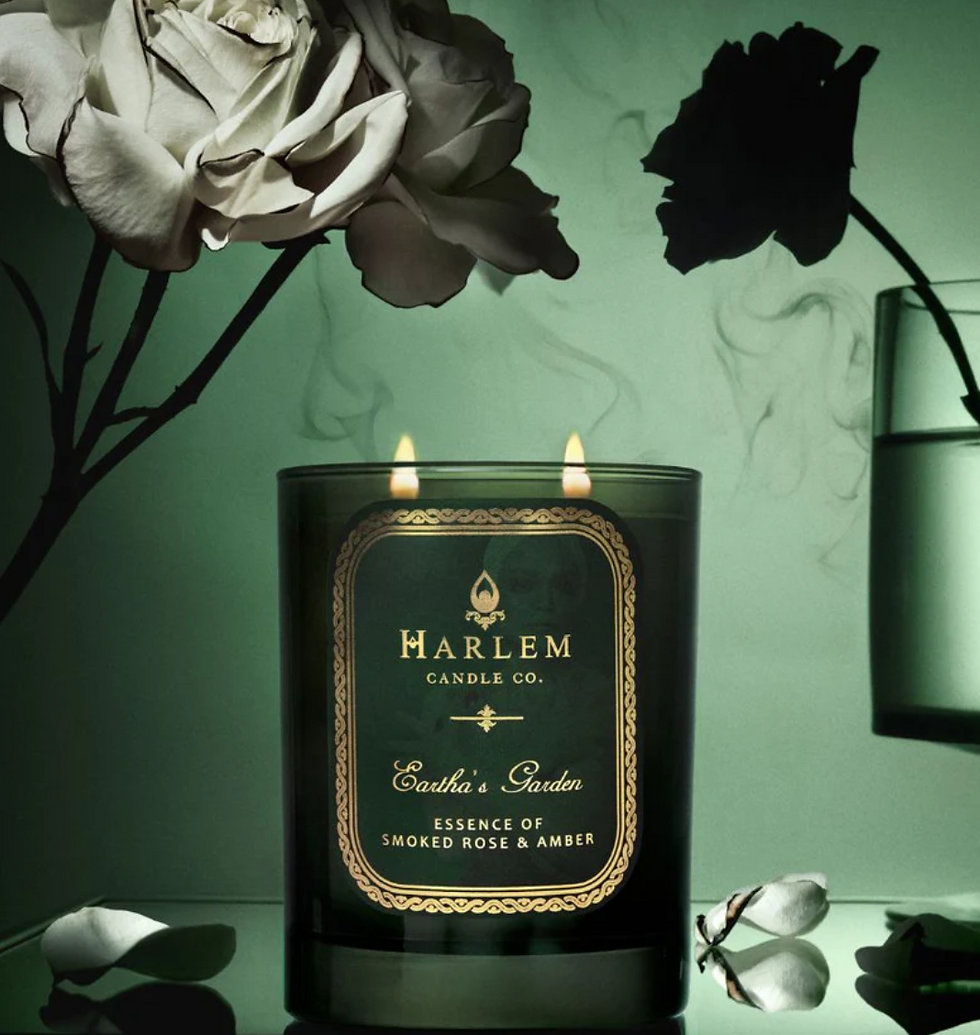
Every once in a while, you come across a brand that captures this so completely the entire concept suddenly makes sense. Harlem Candle Company is one of them.
Harlem Candle Company was created in 2014 by Teri Johnson, inspired by her love of Harlem’s cultural legacy. But what makes these candles extraordinary has very little to do with wax and wick. It has everything to do with the world she created around them.
Every single candle tells a story. Each scent is crafted as a tribute to a person or place in Harlem’s cultural history. Langston, an homage to the legendary poet and novelist Langston Hughes; Lady Day, a tribute to the incomparable Billie Holiday; Eartha's Garden, a nod to the performer Eartha Kitt. The vessels are jewel-toned glass, rich and saturated. The labels are decadent, trimmed in gold. The interior of every box is printed with iconic Harlem locations. Customers are transported the moment that candle is lit. They are willing to pay for that feeling, and to come back for it again and again, because it means something.
You do not need to recreate what Teri Johnson has built. The goal is not to copy someone else’s aesthetic or invent an elaborate fictional universe. The lesson is simpler than that. Strong brands give people something recognizable to step into. A mood. A point of view. A consistent emotional atmosphere.
The next time you name a product, photograph your work, design packaging, or write a description, think beyond the object itself. What does this piece feel like? What kind of person would be drawn to it? What details make it distinctly yours? The answers to those questions are often the beginning of a brand story.


Comments